It’s a common misconception that if you’re involved in a car accident, the police must issue a citation to whoever is at fault. In reality, the decision to write a ticket is not automatic. In many law-enforcement agencies, the issuing of a citation remains at the officer’s discretion, even when fault appears clear. Interestingly enough, we have something called contributing factors on a police report. These contributing factor boxes assign blame if there was no citation issued.
1. What Exactly Is a Citation (Ticket) in an Accident?
A citation, commonly called a traffic ticket, is a written notice issued by a police officer alleging that a driver violated one or more traffic laws. In the context of a car accident, a citation helps document who the officer believes contributed to the crash. It’s an important record that can influence insurance claims, liability determinations, and even potential lawsuits.

When you receive a citation after an accident, it typically includes:
- The specific law or code you’re accused of violating (e.g., “Failure to yield – O.C.G.A. §40-6-71”).
- The location, date, and time of the offense.
- The officer’s name and badge number.
- Instructions on how to pay the fine or contest the charge in court.
A citation does not automatically mean you’re guilty. It simply begins the legal process. You have the right to dispute it in traffic court or through your attorney.
However, not every collision results in a citation. Officers typically evaluate several factors before deciding whether to issue one, including:
- Whether any clear traffic law was broken (speeding, following too closely, running a stop sign, etc.).
- The severity of the crash and whether injuries occurred.
- Availability of witness statements or dash-cam/video evidence.
- Whether weather or road conditions may have contributed to the accident.
For example, if Driver A rear-ends Driver B at a red light, the officer might issue a citation to Driver A for “Following Too Closely.” But if two drivers collide at an intersection and both claim they had a green light with no witnesses or cameras, the officer might choose not to issue any citations because fault can’t be determined with confidence.
Even when no ticket is given, the crash still generates an police report. This report may include “contributing factors” that indicate how the officer believes the accident occurred. While this is not the same as a citation, insurance companies often use it as a guide when deciding who was at fault.
In short:
A citation is an official notice of a traffic violation but it’s not required in every accident, nor does it automatically determine who was legally at fault. It’s one piece of the puzzle in understanding responsibility after a crash.
2. Why Citations Are Not Always Issued
Many drivers are surprised to learn that a police officer isn’t required to issue a citation after every car accident. Even when one vehicle clearly strikes another, the decision to ticket a driver depends on circumstances, evidence, and departmental policy.
Law enforcement officers must often make quick judgments based on limited information at a chaotic scene. Unless there’s clear proof of a traffic law violation, the officer may decide it’s best not to assign fault immediately.
Below are some of the most common reasons a citation might not be issued after a crash:
🧾 1. Officer Discretion
Every officer has the authority to decide whether a ticket is warranted. Their decision often depends on training, experience, and the evidence available at the scene. For instance, if both drivers give conflicting stories and there are no witnesses or dash-cam footage, the officer may choose not to cite either party until more facts emerge.
👀 2. Lack of Clear Evidence
To issue a citation, an officer must be reasonably certain a law was broken. But many accidents happen in seconds, with no surveillance video or eyewitnesses. Without clear evidence of a violation, like speeding, running a stop sign, or illegal lane change, the officer may note “contributing factors unknown” rather than writing a ticket.
Example: Two cars collide while merging. Both drivers insist the other drifted out of their lane. With no physical evidence or witnesses to confirm either version, the officer records the event but issues no citation.
📜 3. Conflicting Statements
When drivers’ accounts differ significantly, officers must determine which is more credible. If both statements are equally plausible, the safest route is often to document the crash and let insurance companies or the courts determine fault.
🌧️ 4. Environmental or Road Conditions
Sometimes accidents occur because of uncontrollable conditions such as wet pavement, glare from the sun, ice, or animals crossing the road. If no one clearly violated a law and the environment contributed heavily, the officer might conclude that no citation is appropriate.
🏛️ 5. Departmental or Local Policy
Different police departments have their own standards. In some jurisdictions, officers are encouraged to issue citations only for clear and serious infractions such as DUI, reckless driving, or running a red light. In others, officers may focus on educating drivers rather than penalizing them for minor or uncertain offenses.
🩺 6. Priority of Medical Response
In more severe accidents, especially where injuries are involved, an officer’s main priority is ensuring that everyone receives medical attention. Gathering details and assigning fault may happen later, once victims are stabilized. In these cases, citations may not be issued at all, or they might be mailed or filed after the investigation is complete.

A citation isn’t a guaranteed outcome after a crash. Police officers must balance evidence, safety, fairness, and practicality before deciding whether to issue one. Even when no ticket is written, an accident report is still filed — and this report becomes the primary document used by insurance companies, attorneys, and courts to determine fault later on.
3. What Are “Contributing Factors” And Why They Matter?
Even when no citation is given, the accident report will often list what’s called a contributing factor. On the official police report you may see a number or code in a box describing what the officer believes contributed to the crash, for instance: “failed to yield,” “following too close,” “exceeding speed limit,” etc.
In Georgia (and in many states) this can look like:
- 1 → No Contributing Factor (you did not contribute)
- 3 → Following Too Close
- 4 → Failed to Yield
- 26 → Other/Unknown (meaning the officer couldn’t determine a specific fault)
… and many more.
If you receive a “26 (other)” in that box for either party, it means neither driver was conclusively found at-fault by the officer, which can complicate how your insurance company treats fault and your claim.
Contributing Factors
0-None
1-Non-Operator Contributing Factor
2-Under the Influence (U.I.)
3-Following Too Close
T4-Failed to Yield
5-Exceeding Speed Limit
6-Disregard Stop Sign/Signal
7-Wrong Side of Road
9-Improper Passing
11-Changed Lanes Improperly
12-Reaction to Object or Animal
13-Improper Turn
14-Parked Improperly
17-Misjudged Clearance
18-Improper Backing
19-No Signal/Improper Signal
20-Driver Condition
22-Too Fast for Conditions
23-Improper Passing of School Bus
24-Disregard Police
26-Other – Details in Narrative
28-Inattentive or Other Distraction (Distracted)
29-Texting (Distracted)
30-Talking on Hands-Free Device (Distracted)
31-Talking on Hand-Held Device (Distracted)
32-Other Activity-Mobile Device (Distracted)
33-Occupant Distraction (Distracted)
34-Other Interior Distraction (Distracted)
35-Other Exterior Distraction (Distracted)
36-Disregard Other Traffic Control
37-Reckless Driving
38-Aggressive Driving
39-Racing
40-Disregard Police – Evasion
41-Not Visible (Object, Person, or Vehicle)
42-Vision Obscured
43-Driver Lost Control – Speed Related
44-Driver Lost Control – Impairment Related
45-Driver Lost Control – Distraction Related

What does 26 mean on contributing factors?
When you get a 26 on contributing factors and no citation this means the officer can not determine liability in the accident. Or, he has no idea why the driver, based on witness, driver account’s and evidence, caused the accident.
What if both parties received no citations but both received a 26 (other)
Both parties receiving a 26 or other in the contributing factors box is a sticky situation. This means, the officer could not determine who was at fault, so he just has decided to put other in contributing factor boxes for both parties involved and let the insurance companies decide. The officer had no witness to collaborate stories or the stories did not match the evidence at the scene. And, he can’t decide who was at fault. This is a situation that you do not want to find yourself in.
Examples of when a 26 might be used
- Red light car accident- It was a he said she said, both parties said the other person ran the red light and no witnesses can be found
- 4 way stop or 2 way stop sign- Same thing as above. The both said the other party did not stop.
- Physical evidence and statements don’t match at all and officer cannot determine fault
What to do if you have a 26 on your police report and no tickets are given
If you get a 26 on your police report and you know you did not do anything wrong, you may want to consult a traffic attorney. He may be able to help get your car fixed and if you are injured, get a personal injury settlement. But be aware, this will be an uphill battle. The insurance company will go by what their policy holder tells them happened. An Attorney will be able to investigate, and see if there were cameras or any witness that can be found.
Real case example of a case that involved a 26 and 26 contributing factors and what an attorney did
Billy was driving through a green light when he was struck in the side by another truck. Both parties said they had a green light. However, the officer could not determine who was at fault , so no tickets were issued. Furthermore, when the accident report was ready, but parties had a 26 in contributing factors. I know Billy, he is a family friend. So, we decided to investigate.
Me and the attorney drove to the intersection and found they had no cameras. There was no way to prove Billy had the green light. Billy’s injuries were a hole through the fatty tissue in his arm. I have no idea how this happened, but a part of the vehicle door actually went through his arm, puncturing it. He also had some soft tissue damage. Billy’s total medicals were around 8k after it was all said and done. The attorney got him 25k, which happened to be the policy limits.
How did he do it?
I have no idea. The other party had a very good insurance company and maybe they suspected the attorney had a witness. The bottom line is, because you got a 26 on your accident report, does not mean you give up. If you know you are right, fight for it.
Does a Citation Mean You Are At Fault?
While a citation strongly indicates fault, it’s not the only piece of evidence. Conversely, not getting a citation doesn’t automatically mean you are free of fault or inability to recover damages. Insurance companies and courts will look at the evidence broadly. They take into account driver statements, witness testimony, medical records, video footage, police report details, not just whether a ticket was issued.
As one legal source put it:
“Even if no one was ticketed, you can still file a claim if you can show the other driver was negligent…”
My Personal Experience with a Citation issued and later was dropped
This involved my nephew who was in West Atlanta. This was not a 26 on the accident report. My nephew was charged with failure to yield a traffic control device. Here is what happened. He was turning left out of a park that had a light at the intersection. His light turned green and he pulled out and was hit directly in the drivers side. The other party called 2 buddy’s on his cell and they quickly showed up as “Witness’s”. Alec got a ticket.
How he was able to prove the accident was not his fault
My good friend who is an attorney took Alec’s case. He went to court on the citational and got it dropped. The other party never showed up. After researching the other party, it was found that he had been busted for insurance fraud. Alec required surgery on his shoulder and medical bills were 55k. Dean, the attorney, got progressive to pay out the maximum of 25k and then went after USAA for UM, he then got 110k from USAA.
This goes to show you, even if they say you were at-fault for the accident, the right attorney can make a case or deny your case. Dean was willing to take a chance and won. I don’t know wany attorney in metro Atlanta that would have taken this case. So if you know you are in the right, don’t roll over, fight . However, try and fight with the right attorney.
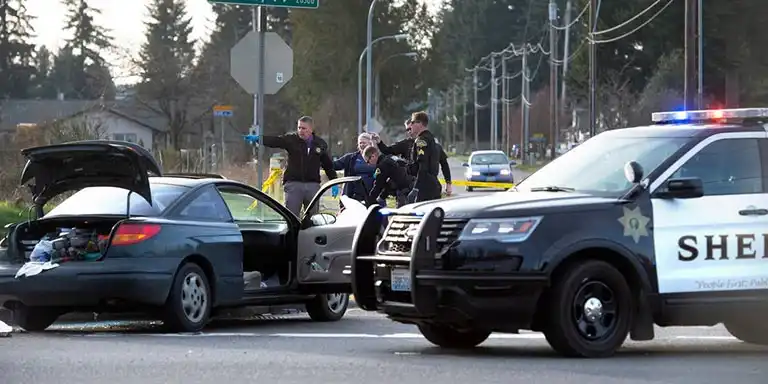
Officers don’t have to write tickets for auto accidents, even if you were at fault for it
In most police circles, it is up to the officer. However, that is not always the case. I was told by an officer in Marietta, GA, they have to give a citation to every person who was at fault in a car accident. What did not ask him was, what happens if he can’t determine what happened in the car accident.
Just because no one received a ticket or citation in a car accident does not mean the officer did not assign blame. May sure when you have been involved in an auto accident, to always get a copy of your police report. This report, along with any citation or tickets issued will be a determining factor as to what the insurance company may do.
If you have the dreaded 26, which is other on your police report and you need help, please contact us, we will be glad to assist anyway we can.