Halloween is one of the most exciting times of the year for children. From choosing costumes and decorating pumpkins to attending parties and going trick-or-treating. Families have plenty of opportunities to make lasting memories.
However, Halloween also brings important safety concerns. Children may be walking near busy streets after dark, drivers may have difficulty seeing trick-or-treaters. Costumes, decorations, and crowded sidewalks can also create unexpected safety hazards.
According to Safe Kids Worldwide, children are more than twice as likely to be struck and killed by a vehicle on Halloween than on other day of the year. This makes pedestrian safety one of the most important considerations for families on October 31.
The good news is that many Halloween accidents can be prevented with preparation, supervision, and a few simple precautions.
At Accident Doctor, we believe that understanding common accident risks is an important step toward protecting yourself and your family. Here is your 2026 guide to Halloween safety, including practical tips for parents, trick-or-treaters, drivers, and homeowners.
Why Halloween Can Be Dangerous for Children
Halloween creates a combination of conditions that can increase the risk of accidents:
- Reduced visibility: Trick-or-treating often takes place after sunset, making it harder for drivers to see children wearing dark costumes.
- Excited children: Children may run between houses, cross streets unexpectedly, or become distracted.
- Increased pedestrian traffic: Neighborhood streets can become crowded with families walking from house to house.
- Costume hazards: Long hems, oversized shoes, masks, and obstructive accessories can cause trips, falls, or limited vision.
- Distracted driving and walking: Phones, music, and other distractions can prevent drivers and pedestrians from noticing approaching traffic.
- Unsafe decorations: Candles, electrical cords, uneven walkways, and poorly secured decorations can cause burns, falls, and other injuries.
Parents, drivers, and homeowners all play a role in making Halloween safer. A little planning before festivities begin can significantly reduce these risks.
Halloween Costume Safety Tips
A great Halloween costume should be fun, comfortable, and safe. Before your child heads out for trick-or-treating, take a few minutes to check the fit, visibility, and accessories.
Choose Costumes That Fit Properly
Long robes, dragging capes, oversized shoes, and loose fabric can cause children to trip on stairs, sidewalks, and driveways. Choose costumes that allow children to walk, run, and climb stairs without difficulty. Hem long garments when necessary and select comfortable shoes with good traction.
Make Your Child Visible to Drivers
Many costumes are black, gray, or other dark colors that blend into nighttime surroundings.
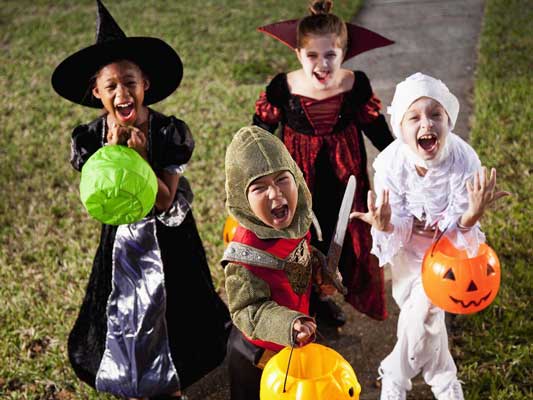
Improve visibility by:
- Adding reflective tape to costumes, jackets, shoes, and treat bags.
- Choosing bright colors when possible.
- Giving children a flashlight or battery-powered lantern.
- Using clip-on LED lights or glow accessories.
- Making sure reflective materials are visible from multiple directions.
Glow sticks can be helpful, but they should not replace a flashlight or reflective materials.
Avoid Masks That Obstruct Vision
Masks can restrict a child’s field of vision and make it harder to notice cars, bicycles, steps, and other obstacles. Consider non-toxic, age-appropriate face paint instead. If your child wears a mask, check that the eye openings allow a clear view in every direction and that breathing is not restricted.
Check Costume Materials and Accessories
Look for costumes, wigs, and accessories labeled flame-resistant or flame-retardant. These materials are not fireproof, so children should still stay away from open flames and hot surfaces.
Avoid sharp swords, rigid sticks, pointed accessories, and realistic-looking weapon props. Soft, flexible alternatives are generally safer.
Before Halloween night, have your child try on the entire costume and walk around the house. Check that they can see clearly, move comfortably, and navigate stairs without tripping.
Trick-or-Treating Safety: Protecting Children on the Streets
Pedestrian safety should be a priority for every family on Halloween. Children may be focused on collecting candy rather than watching traffic, and drivers may not expect pedestrians to cross outside designated areas.
1. Accompany Younger Children
Young children should be accompanied by a responsible adult while trick-or-treating.
Stay close enough to guide them when crossing streets, approaching driveways, and navigating crowded sidewalks. Do not assume a child understands traffic risks simply because they know basic road rules.
For older children who are permitted to go without a parent, establish a clear route, a return time, and a buddy system. Make sure they have a charged phone and know how to contact you in an emergency.
2. Use Sidewalks and Crosswalks
Whenever possible, walk on sidewalks and use marked crosswalks or intersections to cross streets.
Teach children to:
- Stop at the curb before crossing.
- Look left, right, and left again.
- Watch for vehicles turning at intersections.
- Make eye contact with drivers when possible.
- Follow pedestrian signals and obey traffic signs.
- Avoid crossing between parked cars or running into the street.
Children should never assume that a driver has seen them or will stop just because they are at a crosswalk.
3. Avoid Distracted Walking
Phones, games, headphones, and music can distract children from approaching vehicles.
Keep phones put away while walking near traffic. Adults should set the example by remaining attentive and supervising children rather than concentrating on their devices.
4. Choose a Safe Route
Plan your trick-or-treating route before leaving home.
Choose familiar, well-lit streets with sidewalks, safe crossings, and manageable traffic. Avoid roads with high-speed traffic, poorly lit areas, and places where children would need to cross multiple lanes.
Visit homes with exterior lights on and clear access paths. Children should never enter a stranger’s vehicle or home.
5. Establish a Check-In Plan
If older children are trick-or-treating independently, agree on where they will go, who they will be with, and when they will return.
Make sure they know your phone number and understand what to do if the group becomes separated. For children who are easily distracted or prone to wandering, consider closer supervision or a less crowded Halloween activity.
Halloween Driving Safety Tips
Drivers have a special responsibility to protect pedestrians on Halloween. Children may be excited, difficult to see, and unpredictable around traffic. Whether you are driving through a residential neighborhood, leaving a party, or heading home from work, use extra caution.
Slow Down in Residential Areas
Reduce your speed in neighborhoods where trick-or-treating is taking place. Driving more slowly gives you additional time to react when a child enters the roadway unexpectedly.
Pay particular attention near intersections, driveways, parked vehicles, and areas where groups of children are gathering.
Watch for Children in Unexpected Places
Do not assume children will remain on sidewalks or cross only at designated crossings.
Check carefully before moving through intersections, turning into driveways, or backing out of parking spaces. Look around parked vehicles and avoid passing a stopped car when children may be crossing in front of it.
Turn on Your Headlights Early
Use your headlights before dusk and whenever visibility is reduced. Proper lighting helps you see pedestrians sooner and makes your vehicle more visible to others.
Remember that dark costumes and shadows can make children difficult to recognize, even on streets with streetlights.
Eliminate Distractions
Put your phone away and avoid activities that take your attention off the road.
Adjust your navigation, music, and vehicle controls before driving. Even a brief distraction can prevent you from noticing a child entering the roadway.
Never Drive Impaired
Halloween parties may involve alcohol or other impairing substances. Never drive after drinking or using drugs that affect your ability to operate a vehicle safely. Arrange a designated driver, taxi, or rideshare in advance if needed.
Be Careful Around Driveways and Parking Lots
Children may move behind vehicles while adults are loading candy bags or organizing groups.
Check mirrors and blind spots before backing up, move slowly, and take extra care when entering or leaving driveways. Backup cameras are helpful, but they do not replace checking your surroundings.
Halloween Home and Decoration Safety
Homeowners and Halloween party hosts should prepare their properties before welcoming trick-or-treaters.
Keep Walkways Clear and Well Lit
Remove garden hoses, loose cables, toys, fallen branches, and other objects that could cause a fall. Repair or clearly identify uneven steps and slippery surfaces. Illuminate walkways, stairs, porches, and driveways so children can see where they are going.
Keep electrical cords away from walking paths and secure decorations so they cannot fall or blow into pedestrian areas.
Use Battery-Operated Candles
Traditional candles inside jack-o’-lanterns can ignite costumes, dry leaves, and nearby decorations. Battery-operated LED candles are a safer alternative. Keep decorations away from heaters and other heat sources and never leave an open flame unattended.
Keep Pets Secure
Even friendly pets may become frightened by unfamiliar costumes, loud noises, and frequent visitors. Consider keeping pets in a quiet, secure room during peak trick-or-treating hours. Make sure doors and gates remain secure to prevent pets from escaping or startling visitors.
Keep Entrances Accessible
Avoid placing decorations where they block steps, doorways, handrails, or emergency exits. If you are hosting a Halloween party, provide clear paths for guests and keep food, drinks, and electrical equipment away from areas where people are walking.
Pumpkin Carving and Fire Prevention
Pumpkin carving is a popular Halloween activity, but knives and other sharp tools can cause serious cuts.
- Have an adult handle sharp carving tools.
- Let younger children decorate pumpkins with paint, stickers, or markers instead of carving them.
- Place pumpkins on a stable surface when carving.
- Keep children away from open flames and hot wax.
- Keep costumes, paper decorations, and dry leaves away from heat sources.
- Never leave candles burning unattended.
For outdoor decorations, inspect electrical lights and cords for damage. Use products rated for their intended indoor or outdoor environment.
Candy Safety and Food Allergies
Once trick-or-treating is over, inspect your child’s treats before allowing them to eat anything.
Inspect Candy Before Eating
Discard treats that are unwrapped, have damaged packaging, appear tampered with. Avoid homemade treats from unknown sources if you cannot verify how they were prepared. Do not allow young children to eat hard candies, gum, or other treats that may present a choking hazard for their age.
Check Food Allergy Labels
For children with food allergies, carefully read ingredient labels before allowing them to eat candy or snacks. Keep prescribed emergency medication readily available according to the child’s allergy action plan. If a child develops breathing difficulty, throat swelling, or other signs of a severe allergic reaction, seek emergency assistance immediately.
Practice Moderation
Consider serving a meal before trick-or-treating so children are less likely to eat large amounts of candy while out. Set reasonable expectations for treats and encourage children to enjoy their candy gradually. For families seeking alternatives, stickers, pencils, and other small non-food items can make good Halloween treats.
What Should You Do If Your Child Is Injured on Halloween?
Even when families take precautions, accidents can still happen. Knowing how to respond can help protect your child’s health.
1. Check for Immediate Danger
Move away from traffic, fire, or other hazards when it is safe to do so.
Call 911 if:
- If a child is involved in a vehicle collision
- Has a serious injury,
- Is unconscious,
- Has difficulty breathing
- May have a head, neck, or spinal injury
Avoid moving someone with a suspected serious neck or spinal injury unless necessary to escape immediate danger.
2. Seek a Doctor When Needed
Some injuries are immediately obvious, while others may not become apparent until hours or days later. When in doubt call their PCP and have them checked out.
After a collision, children may develop symptoms such as:
- Headaches or dizziness.
- Neck or back pain.
- Bruising, swelling, or tenderness.
- Abdominal pain.
- Difficulty walking or using an injured limb.
- Confusion, unusual behavior, or persistent vomiting.
Do not dismiss a child’s complaints simply because they initially appeared uninjured after an incident.
3. Document the Incident
If a vehicle collision or another significant accident occurs, document what happened when it is safe to do so.
Record the date, time, location, and contact information for parties involved and witnesses. Photographs may help preserve information about the scene and visible injuries.
Keep copies of medical records, discharge instructions, bills, and other relevant documentation. If an insurance claim is filed, these records can help establish what happened and what treatment was provided.
Medical care should always take priority over collecting evidence.
Halloween Safety Checklist for Parents
Before leaving home, take a moment to review this checklist:
- Costumes fit properly and do not drag on the ground.
- Children can see clearly and move comfortably.
- Reflective materials and lights are attached to costumes or bags.
- Flashlights have working batteries.
- The route and return time have been agreed upon.
- Younger children have responsible adult supervision.
- Older children understand street-crossing rules and the buddy system.
- Phones and headphones will not distract children near traffic.
- Food allergies and emergency medications have been considered.
- A responsible driver or alternative transportation is arranged for parties involving alcohol.
A few minutes of preparation can help prevent avoidable injuries and allow your family to enjoy the holiday with greater confidence.
Make Halloween 2026 Safe, Fun, and Memorable
Halloween should be a time for costumes, candy, laughter, and family memories. Not preventable injuries.
Families can reduce many of the risks associated with Halloween night by:
- choosing safe costumes
- supervising children
- staying visible
- using safe crossings
- driving cautiously
- keeping walkways free of hazards
Remember that safety does not end when trick-or-treating is over. Inspect treats, use caution with decorations, and see a doctor when an injury occurs.
References
Safe Kids Worldwide — Halloween Safety
National Highway Traffic Safety Administration — Halloween Safety Tips